
Releasing a report titled 'Profiting from Pain' in Davos, the rights group further said as the cost of essential goods rises faster than it has in decades, billionaires in the food and energy sectors are increasing their fortunes by $1 billion every two days.

Maharashtra's "radical" lockdown move will have an economic impact of Rs 40,000 crore, with the trade, hotels and transport sector to bear the biggest dent, Care Ratings said on Monday. The rating agency said the loss of economic activity will have a 0.32 per cent impact on the gross value added (GVA) growth at the national level. It revised down its national GDP growth estimate to 10.7 - 10.9 per cent from the 11 - 11.2 per cent given a week ago. Maharashtra has been contributing nearly 60 per cent to the daily COVID-19 infections nationally and had over 57,000 new cases on Sunday.
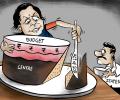
Every option before the finance minister comes with a price tag, observes T N Ninan.
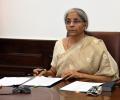
Finance Minister Nirmala Sitharaman on Friday said the entire fiscal stimulus announced by the government would be funded by borrowings and revenues, and taxpayers will not be charged even a single penny. "I am not expecting the stimulus to be funded by taxpayers. Not a rupee from the taxpayer. The entire amount .... is shown as revenue and borrowings. "The government is borrowing to spend, but it is not taking from people," she said while interacting with journalists at the IWPC (Indian Women's Press Corps).

The government's austerity drive announced on Thursday , would lead to a saving of up to Rs 40,000 crore (Rs 400 billion) or 0.3 per cent of the Gross Domestic Product (GDP) but poses risks to growth, Japanese brokerage Nomura has said.

To help revive the economy battered by COVID-19, Finance Minister Nirmala Sitharaman on Monday announced a slew of measures, including Rs 1.1 lakh crore credit guarantee scheme for improving health infrastructure, and enhancing the limit under the ECLGS by 50 per cent to Rs 4.5 lakh crore for the MSME sector facing liquidity crunch. Sharing the details of stimulus package, the finance minister said this comprises eight relief measures and other eight measures to support the economic growth. She announced Rs 1.1 lakh crore loan guarantee scheme for COVID-affected sectors, including health sector, which includes guarantee cover for expansion or for new projects. Besides, she said, additional Rs 1.5 lakh crore limit enhancement done for Emergency Credit Line Guarantee Scheme (ECLGS) scheme.
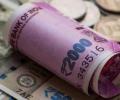
For the first time, the value of card and mobile payments of Rs 10.57 trillion was more than ATM withdrawals of Rs 9.12 trillion in Q4 of fiscal 2019-20. In the months of lockdown, the gap may have widened further, but cash could be back in vogue when the situation normalises.
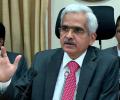
While efforts are being mounted on a war footing to arrest its spread, COVID-19 will impact economic activity in India directly through domestic lockdown. The second-round effects, it said, would operate through a severe slowdown in global trade and growth.

'While we note the very strong cyclical recovery in the economy, we believe there is still uncertainty over medium-term prospects.'
Battling a sharp surge in inflation, the Reserve Bank is all for a smooth monetary policy response and the desire to have smaller hikes led it to tighten the policy in an off-schedule meet, a source said on Thursday. Inflation has been massively impacted by Russia's invasion of Ukraine and will in due course also reflect the dent caused by Indonesia banning palm oil exports, the source aware of central bank thinking said, indicating that there was no other option but to respond. "The idea is to have a smooth policy response, not to put in large cold turkey responses," the source said, making it clear that the preference is for smaller magnitude responses and not larger ones.

Finance Minister Nirmala Sitharaman on Wednesday announced Rs 3 lakh crore collateral free automatic loan for businesses, including MSMEs, to benefit 45 lakh small businesses. Detailing parts of the Rs 20 lakh crore economic stimulus package, she said this loan will have a 4-year tenure and will have 12-month moratorium, she said.

Despite a slowing economy, the Budget does not envisage any major stimulus through the budgeted fiscal deficit figures, said Goldman Sachs.
The immediate revenue loss could worsen the Centre's fiscal deficit, from the budgeted 3.3 per cent of gross domestic product (GDP) to 3.7 per cent of GDP -- a massive 40-basis-point increase. It was stabilised at 3.4 per cent since 2016-17, report Abhishek Waghmare and Dilasha Seth.

The finance minister could well be on her way to setting a record of achieving the biggest single-year reduction in the government's fiscal deficit, explains A K Bhattacharya.

Earlier this month, the Central government said in a reply in Parliament it had taken measures to double farmers' income by the end of FY23 and the progress made so far indicated it was "on the right track". However, a close look at the data and at the assumptions made shows that as of now, it appears the country is unlikely to achieve the goal in real terms.

Much of the rural recovery story is based on the premise of agriculture doing well. Even if it clocks a growth of 2.5-3 per cent this year, it is still just around 15 per cent of the overall GDP. The non-farm sector, which constitutes a bigger portion of the overall rural economy, is now hampered by disruptions and lockdowns.

Amid an increase in localised lockdowns across the country, Reserve Bank Governor Shaktikanta Das on Wednesday said there is no need for a loan repayments moratorium at present, stating that businesses are better prepared to face the situation. It can be noted that the RBI had announced a six-month moratorium in the early days of the national lockdown last year to help borrowers impacted by a chilling in economic activity. The entire state of Maharashtra is in a lockdown for non-essential services and localised and night lockdowns are being observed in many pockets of the country, including the national capital, to restrict the surge in cases.

GST rate cut for real-estate, income transfer scheme, farm loan waivers execution and recapitalisation of PSU banks have the potential to boost India's growth in a few months, says Neelkanth Mishra.

'We believe there will be a full shutdown for four weeks and a partial shutdown for eight weeks.' 'Hence, economic activity is unlikely to normalise before the end of May.'

'India's sizeable foreign exchange reserves should serve as a buffer.'
The Reserve Bank may be hitting the end of its tolerance for high inflation and will most likely hike interest rates in the first half of 2022, analysts said on Friday. The central bank will also start rolling back its accommodative policies which have led to easy liquidity conditions, they said. The view from analysts came even as inflation cooled down to 5.6 per cent for July, after two months of breaching the upper end of the RBI's tolerance band of 6 per cent.

There are several welcome standalone reforms, but these do not add up to a coherent strategy to achieve a $5 trillion economy or secure Aatmanirbharta, observes Rathin Roy.
The message for 2024 is that the man on the street is not going to be euphoric if the G-20 crowns Modi as king-emperor for 2023, or if India sends its first man to space just ahead of the Lok Sabha polls. Even a 'temple consecration' in Ayodhya, or a Uniform Civil Code, or both of them together, may not have enough electoral purchase if fuel and commodity prices are not rolled back, and money-in-the-pocket does not fatten, points out N Sathiya Moorthy.

S&P Global Ratings on Wednesday said Indian banks face a systemic risk as the second COVID wave will impair the performance of financial institutions in the April-September period. Stating that economic recovery remains highly vulnerable to setbacks due to COVID, particularly if fresh outbreaks trigger new lockdowns, S&P said the banking sector's weak loans will likely remain elevated at 11-12 per cent of gross loans in the next 12 to 18 months. "The second wave has front-ended weakness in asset quality," said S&P Global Ratings Credit Analyst Deepali Seth Chhabria. "Financial institutions face a strained first half amid weak collections and poor disbursements."

Days after keeping India's rating at lowest investment grade for 13th year in a row, the rating agency in a webinar said despite the contraction in GDP this year, the country continues to be an outperformer among the peer groups.

Uptick in growth projected in second half of current fiscal based on 10 factors including higher FDI flows, build up of demand pressure, positive GST revenue growth

The Indian economy's election-year syndrome cannot be ignored, says A K Bhattacharya.

This will cost the government Rs 3.1 trillion, about 10 per cent of its annual expenditure, and higher than any other spending item in its Budget.
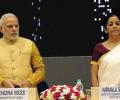
Prime Minister Narendra Modi on Thursday reviewed the impact of Covid-19 on the Indian economy and a possible second stimulus to boost sectors hit hard by the pandemic. Modi held discussions with Finance Minister Nirmala Sitharaman as the pandemic hit sectors from small industries to the aviation sector hard with millions of jobs at stake.

Fitch Ratings on Monday said the shock to economic activity from the latest wave of COVID-19 pandemic will be less severe than the one in 2020, but recovery is likely to be delayed as economic activity dropped in April-May. The global rating agency said there are growing indications that the latest wave of COVID-19 infections will add to risks among financial institutions (FIs) and anticipates that the Reserve Bank of India (RBI) may introduce additional measures to support the financial sector if indications of economic stress mount.

The recovery in the Indian services sector was sustained in November as new work orders supported business activity growth and the first rise in employment in nine months, a monthly survey said on Thursday.

Analysts, however, predict it would be an uphill climb for export-reliant China's economy going forward as it faced intensified conflict with the US and the negative fallout on its external trade due to Beijing's increasingly aggressive policies towards countries like India resulting in bans of its products and services.
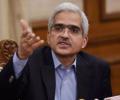
These are the highlights of RBI Governor Shaktikanta Das's statement and resolution of the Monetary Policy Committee (MPC):

'The fiscal pressure will be there, but the intent of the government behind this move is to spur demand and growth.'

Illustration: Uttam Ghosh/Rediff.com After a brief respite at the year's start, FPIs have dumped shares worth more than $5.7 billion (Rs 42,596 crore), taking the cumulative net outflows since October to $10.5 billion (Rs 78,466 crore), and adding to the volatility on the bourses. The figure would have been a lot worse had it not been for net purchases to the tune of $5.7 billion in the primary market from October to date.
Gujarat, for the second consecutive year, has topped the Niti Aayog's Export Preparedness Index 2021 which is aimed at assessing the readiness of the states in terms of their export potential and performance. Gujarat was followed by Maharashtra, Karnataka, Tamil Nadu, Haryana, Uttar Pradesh, Madhya Pradesh, Punjab, Andhra Pradesh and Telengana, according to the government think tank's report. Union territories and states like Lakshadweep, Arunachal Pradesh, Mizoram, Ladakh and Meghalaya were placed at the bottom.

The world is in the face of a devastating impact due to the coronavirus pandemic and has clearly entered a recession, the International Monetary Fund said on Friday, but projected a recovery next year. "We have reassessed the prospects for growth for 2020 and 2021. It is now clear that we have entered a recession as bad or worse than in 2009. We do project recovery in 2021," IMF Managing Director Kristalina Georgieva told reporters at a news conference.

Monsoon is likely to be below normal in the current year at 93%.
Two years ago, India was touted as a rare bright spot in a gloomy global economy with GDP growth outpacing a slowing China.

The world's biggest lockdown that shut a majority of the factories and businesses, suspended flights, stopped trains and restricted movement of vehicles and people, may have cost the Indian economy Rs 7-8 lakh crore during the 21-day period, analysts and industry bodies said.
 © 2026 Rediff.com - Advertise with us - Disclaimer - Privacy Policy - Sitemap - Feedback - About us - Terms of use - Grievances